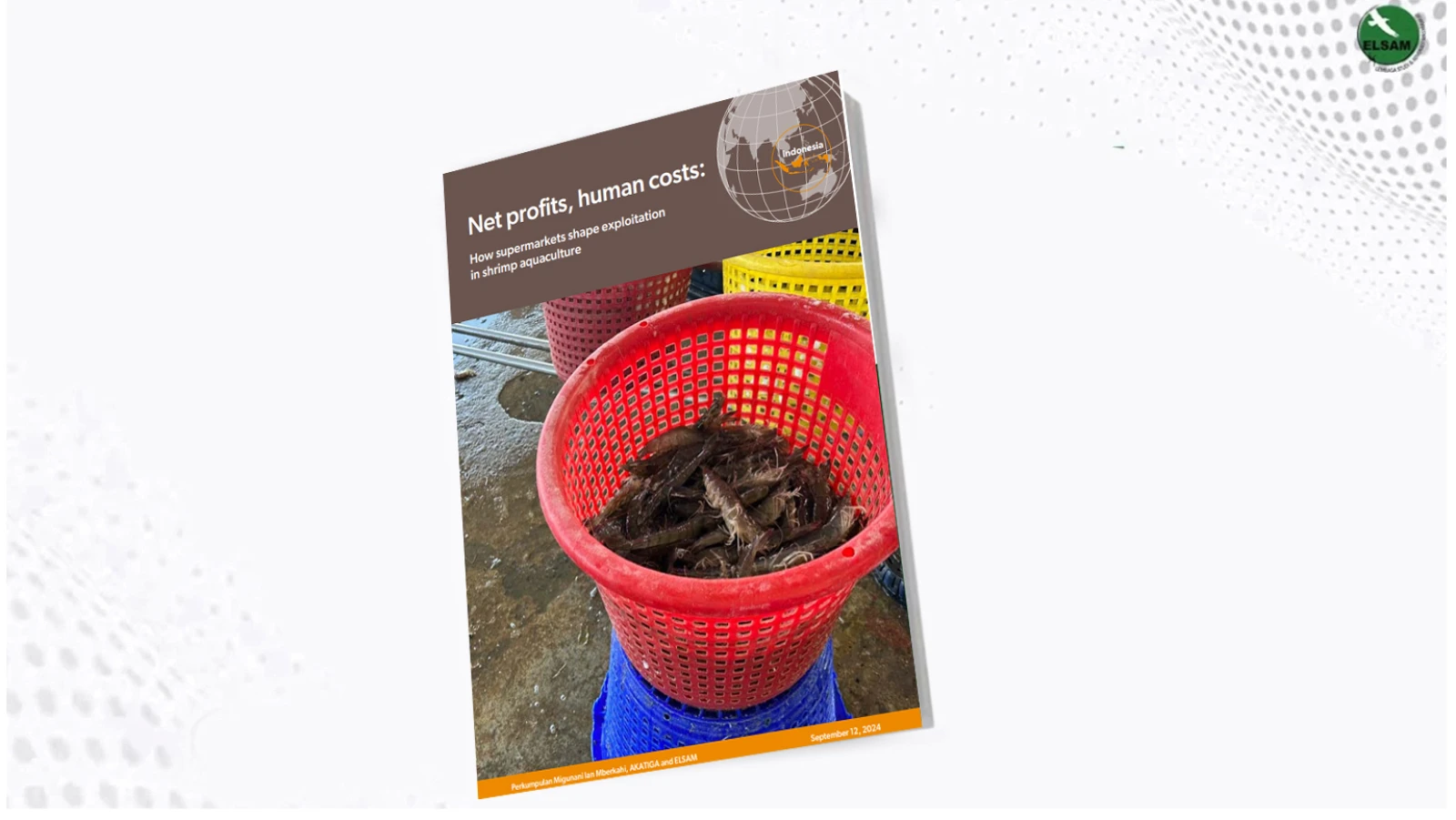
Net Profits, Human Cost: How Supermarkets Shape Exploitation in Shrimp Aquaculture
In 2023 and 2024, three Indonesian civil society organizations—Migunani, AKATIGA, and ELSAM—conducted research on labor and employment conditions in Indonesia’s export-oriented shrimp supply chain, using the ILO Indicators of Forced Labor. This study examines how these conditions align with the International Labour Organization’s (ILO) criteria, utilizing a cross-sectional design with mixed methods. Primary research involved interviews with 221 individuals across nine provinces—Lampung, Bali, West Nusa Tenggara, West Java, Central Java, East Java, South Sulawesi, Banten, and Jakarta—where at least two-thirds of Indonesia’s export-oriented shrimp supply chains are concentrated. Secondary research analyzed the trade dynamics of Indonesia’s shrimp industry. The study finds labor and human rights violations, including instances of debt bondage, within the production tiers of Indonesia’s shrimp supply chain. This exploitation is driven by price pressures from actors in the purchasing and retail tiers, particularly supermarkets in the United States, United Kingdom, and Europe, which are paying less for shrimp than the cost to produce it. These supermarkets also prevent price recovery by increasing prices for consumers. Since the pandemic, workers in the production tiers report worsening safety conditions and declining earnings, which often fall below the minimum wage. Wages are paid irregularly at the discretion of employers and are linked to fluctuating market prices for shrimp. The research also reveals that most shrimp exports from Indonesia are not traceable or sustainably produced due to the dominance of informal workers in production. This raises significant concerns that consumers are being misled about the working conditions of shrimp laborers, despite supermarkets’ claims of respecting human rights.
Detailed recommendations to respond the findings are available in this link :