Developing Indonesia-Contextualized Digital Platform Regulations
According to Indonesian law, all digital platforms are qualified as PSE (Electronic System Operator) without a clear distinction regarding the business model. This distinction is important because it will affect the different liability models of each platform.
The existing regulations are still focused on the intermediary business model, often referred to as over-the-top services. In fact, Permenkominfo No. 5/2020, in the regulation related to the responsibility for distributed content, only regulates platforms that fall into the category of user-generated content. In addition, the government recently issued Presidential Decree 32/2024 on the responsibility of digital platform companies to support quality journalism, which requires digital platforms to cooperate with media companies.
In order to identify approaches and models for regulating digital platforms in Indonesia, ELSAM is in the process of conducting a study to prepare regulatory reforms and responsibilities of digital platforms in Indonesia: learning from various standards and good practices. This study is at least based on various digital technology innovations that derive various digital platform business models, experiences or best practices from various countries, regions and international/regional organizations in regulating digital platforms, as well as referring to the conditions and developments of related regulations and policies in Indonesia.This study aims to provide policy recommendations as a follow-up to the substantive amendments of the ITE Law.
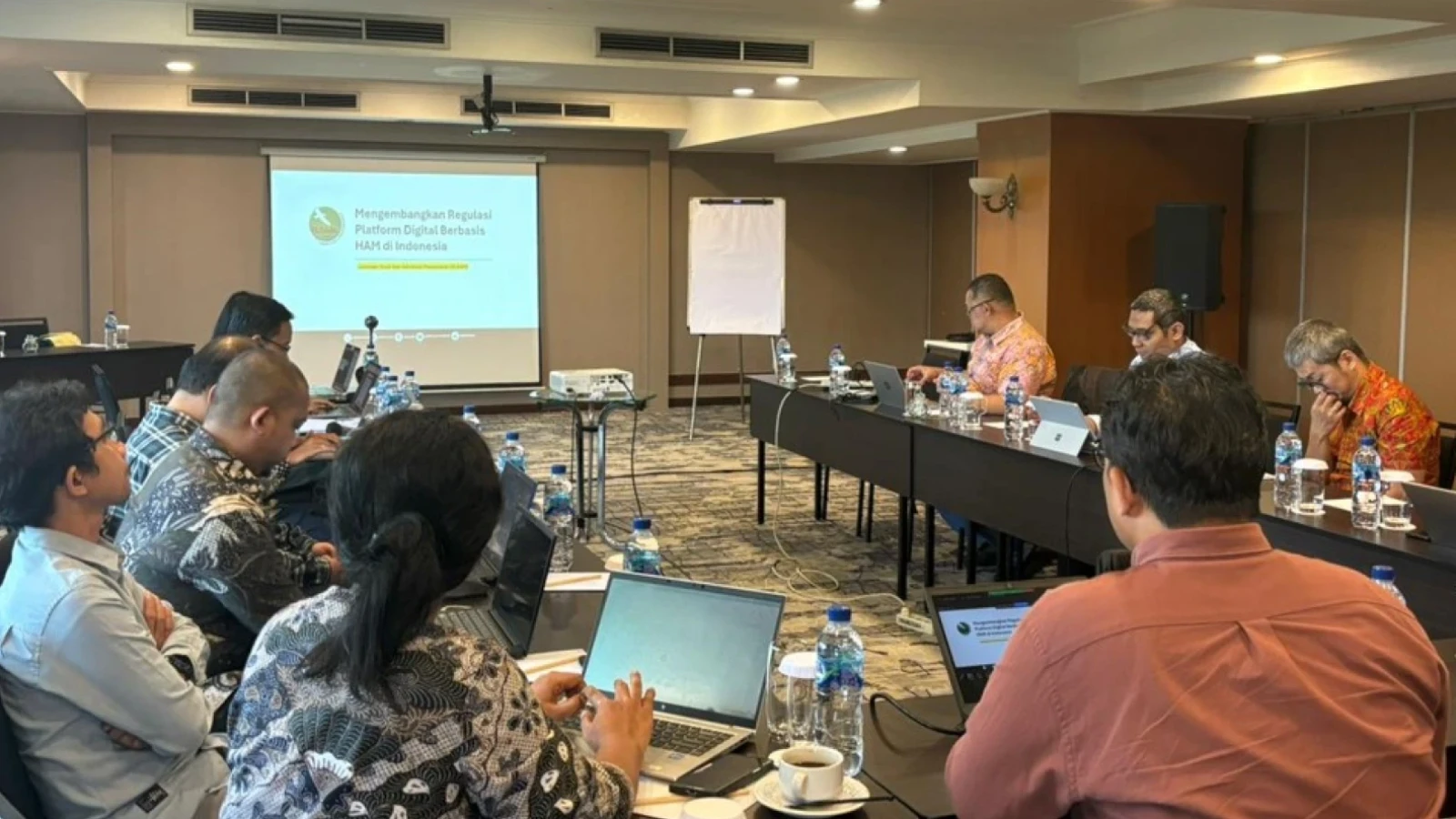
As part of the study process, ELSAM organized a Focus Group Discussion (FGD) entitled "Developing a Regulatory Model for Digital Platforms with Indonesian Context" on 26 September 2024. The FGD aimed to answer a number of questions, including: (1) What are the main challenges in regulating digital platforms? (2) To what extent have regulations and policies in Indonesia regulated digital platforms, what are the problems and challenges? (3) How are the development of regulations and policies in regulating digital platforms in different countries, and to what extent are they able to promote the development of good platform regulations? (4) What is a good regulatory model and approach for digital platforms? (5) What are the contexts and characteristics that make a difference in the development of digital platform regulation in Indonesia?
The discussion, moderated by Wahyudi Djafar, began with a presentation by ELSAM on different models of digital platform regulation, referring to a number of guidelines, such as those developed by UNESCO, as well as regulations enacted in various countries, such as the EU Digital Services Act and the UK Online Safety Act. The discussion was attended by representatives from various civil society organizations such as AJI Indonesia and TIFA Foundation, international organizations from UNESCO and GIZ, and representatives from platforms represented by the Indonesia E-Commerce Association (IdEA) as well as government representatives, from the Coordinating Ministry for Economic Affairs, and the Ministry of Communication and Information. Also present were representatives from independent state institutions, the Business Competition Supervisory Commission (KPPU), the National Human Rights Commission, and the National Commission on Women.
