Civil Society Coalition Demands Komnas HAM's Role in Addressing Haze
Various stakeholders were invited to this activity, in particular institutions/agencies related to business and human rights, companies, civil society representatives, academics and the press. The aim was to find new strategies and meanings for streamlining and contextualizing business and human rights norms in order to instill human rights values as a corporate culture.
This activity also aims to identify opportunities and challenges for each stakeholder to implement the Business and Human Rights SNP in accordance with their respective mandates and scope. In addition, it is expected to build a common understanding among stakeholders as a first step in creating a business and human rights ecosystem in Indonesia, in particular to explore new strategies and meanings to streamline and contextualize business and human rights norms to instill human rights values as a corporate culture.
A number of civil society organizations that are members of the Smoke-Free Indonesia Coalition (KIBAS) continue to encourage the National Commission on Human Rights (Komnas HAM) to investigate the issue of haze caused by forest and land fires (karhutla) in Central Kalimantan.
In 2021, KIBAS sent a petition to Komnas HAM asking the institution to pay attention to the haze cases that occurred during 2015-2019. The sender of the petition said that the haze had caused people's rights to be violated. The haze not only affects health, but also hinders teaching and learning activities and stops the economic activities of residents.
Forest and land fires continue to occur every year and have a serious impact on the community. This year, forest and land fires have also occurred in various regions, although the extent is not as severe as in previous years.
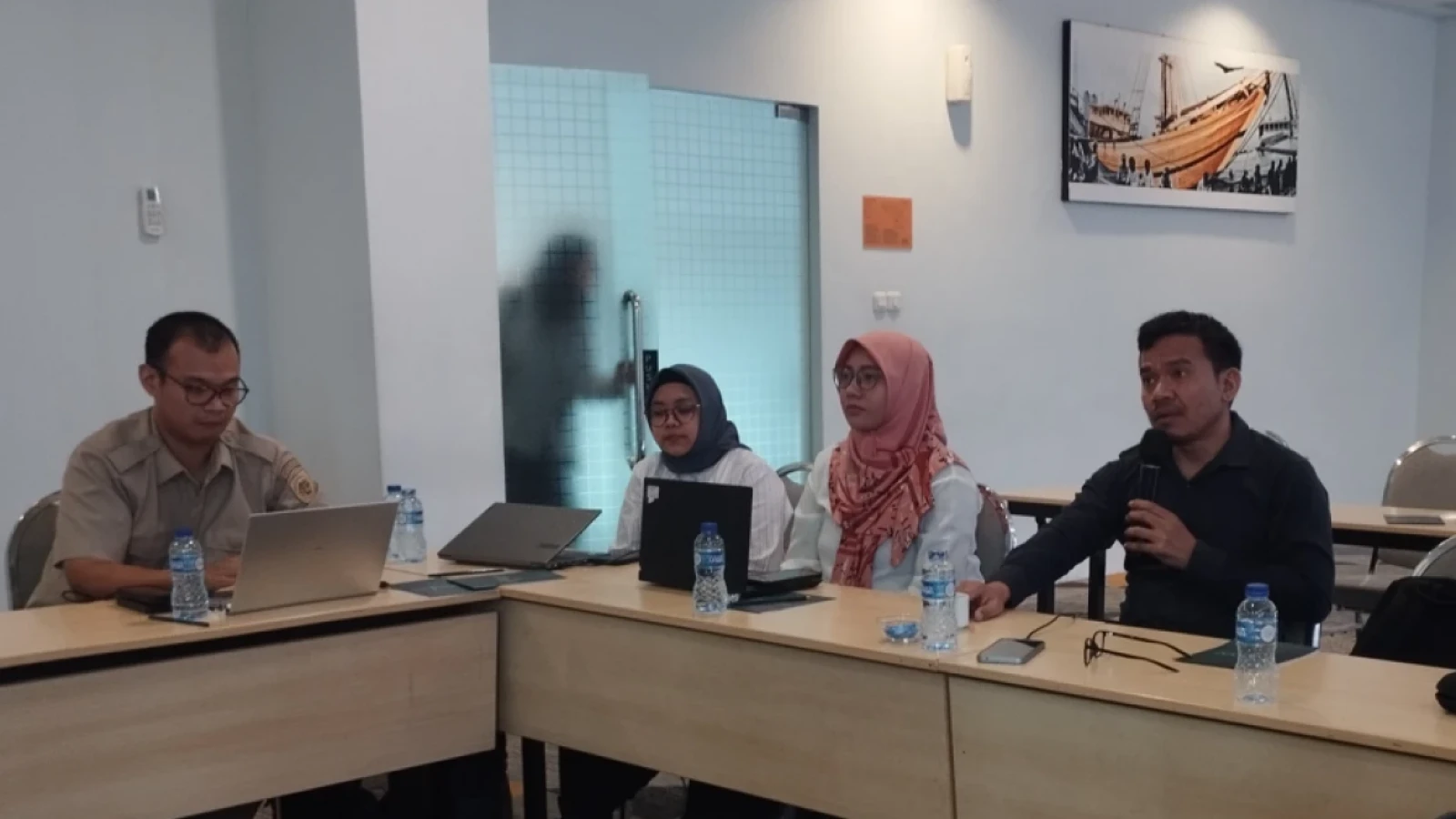
In response to the petition, Komnas HAM initiated a dialogue forum in Jakarta on Monday (10/21/2024). The meeting was attended by representatives from the Ministry of Environment, the Ministry of Agriculture and Spatial Planning/National Land Agency, and the National Commission on Violence against Women (Komnas Perempuan).
From the coalition of petitioners, the Institute for Community Studies and Advocacy (ELSAM), Justice, Peace and Integrity of Creation (JPIC) Kalimantan and Perkumpulan HuMa were present. Other KIBAS members such as Walhi Central Kalimantan, Palangkaraya Ecological and Human Rights Studies (Progress) Central Kalimantan, and Greenpeace Indonesia were also present.
JPIC Kalimantan Executive Director Sani Lake said the government was not prepared to deal with forest and land fires. As a result, Sani said, the incident, which could have been avoided, recurs every year. Sani reiterated KIBAS' call for Komnas HAM to investigate a number of companies strongly suspected of being involved in the arson.
"If we don't find (arsonist companies) and hold them accountable, the fires will continue to happen. Firm action and monitoring of the policy must continue," Sani said.
Bayu Herinata, executive director of Walhi Central Kalimantan, said the same. According to Bayu, bad events such as forest and land fires can be predicted and the government has time to prepare efforts to prevent and control them.
"Fires often occur in the same place. The timing is also the same every year," Bayu said.
He gave an example of fires that occurred in 2019 and 2023. "Both incidents occurred in several villages in Pulang Pisau regency," he continued.
Residents affected by the haze in Central Kalimantan have used a number of channels to complain about their problems. In addition to complaining to Komnas HAM, residents have also taken legal action through a civil lawsuit. Although the residents won at the cassation level in 2019, they have yet to receive their rights.
"The government is not implementing measures to protect the community, such as providing oxygen chambers and free medical treatment," said Kartika Sari, director of Progress Central Kalimantan.
Kartika also complained that data on a number of companies proven to have committed arson had not been made public.
Komnas HAM's response
Komnas HAM Commissioner Saurlin Siagian insisted that his agency had taken a number of steps to address the haze problem. In 2015, when major forest and land fires occurred in a number of regions, Komnas HAM immediately formed a monitoring team, he said.
Mimin Dwi Hartono, a member of the Komnas HAM agricultural team chaired by Saurlin, said the team's task was to review the state's efforts to protect and fulfill the right to health.
"The monitoring was conducted in Riau, Central Kalimantan and South Sumatra," Mimin said.
Komnas HAM drew several conclusions from the monitoring. One of them, said Mimin, is that the government is very slow in restoring the right to health of people exposed to smoke.
Local governments also do not have the budget or resources to deal with the effects of forest and land fires, Mimin added. As a result, "23 victims have died and for 18 consecutive years the quality of health of people exposed to smoke has drastically declined," Mimin said.
In addition to monitoring, Komnas HAM has also issued several Standards, Norms and Regulations (SNPs) relevant to the issue of forest and land fires and haze. These include the SNP on the Right to Health, the SNP on Business and Human Rights, and the SNP on the Right to Justice.
The SNP itself is a practical elaboration of various human rights instruments. The SNP should be one of the references for stakeholders in making various policies.
Another effort by Komnas HAM to encourage companies to respect human rights is through human rights assessments. Saurlin said his agency is currently developing human rights assessment tools for ministries and institutions, local governments and companies.
"What companies fear most is actually public judgment. The hope is that this assessment will lead parties to change their behavior," Saurlin said.
Regarding the management of haze and forest and land fires, he said Komnas HAM's role is more to coordinate and make policy recommendations to the government. The direct handling of forest and land fires and their impacts, Saurlin said, is in the hands of sectoral ministries and local governments.